The Chromie Squiggle

About Erick Calderon (Snowfro)
Erick Calderon, popularly known online as Snowfro, is one of the few true digital art pioneers born out of the contemporary age. Like the generations of pioneers before him, his creative output is underpinned by an unwavering desire to realize a creative vision – one only possible through modern technology. Originally from Mexico City, he is based in Houston, Texas, and spent the first 18 years of his career working with ceramic tiles as central to his practice.
Eric is widely lauded as one of a handful of creatives that are highly successful simultaneously in 3 fields of art around his practice - he is a celebrated generative artist, he is a highly successful entrepreneur building out the ArtBlocks business and he is an extraordinary collector with an important collection of generative and digital artworks.
All of Eric's creative pursuits involved his fascination with color and light—a fascination which would continue into the next stage of his career. His first solo exhibition in 2016 at m Architects offered a crossover of his ceramic tile work into pixel art. In 2017, after discovering Larva Labs' CryptoPunks, a series of generative characters stored on the Ethereum blockchain as non-fungible tokens, Eric began experimenting with ways to connect the blockchain with his own art and colour palette. In 2018, Eric would debut a new experimental platform called Art Blocks. Using an interface and token stored on the Ethereum blockchain, users could generate a unique visual output from a number of generative projects themselves, creating final pieces that combine an artist's algorithm, the platform as an interface and a timely input from the collector in a triumvirate moment that created works that deeply resonated with a community of collectors who felt that they participated in the creation act.
Art Blocks was a novel idea. The first project to capture excitement and zeitgeist of the community was a generative algorithm called Chromie Squiggle. Outputs consisted of a squiggled line that shifted in color and shape as it progressed from left to right. Some Squiggles included many colors, while others were simpler gradients shifting from one color to another. Two thousand of these artworks were generated, printed, and given out at the La Nova Tile holiday party in 2018, along with the opportunity to claim a digital version of the squiggle on Art Blocks. Of the 2,000 recipients, only 14 decided to claim a digital version with an Ethereum address.
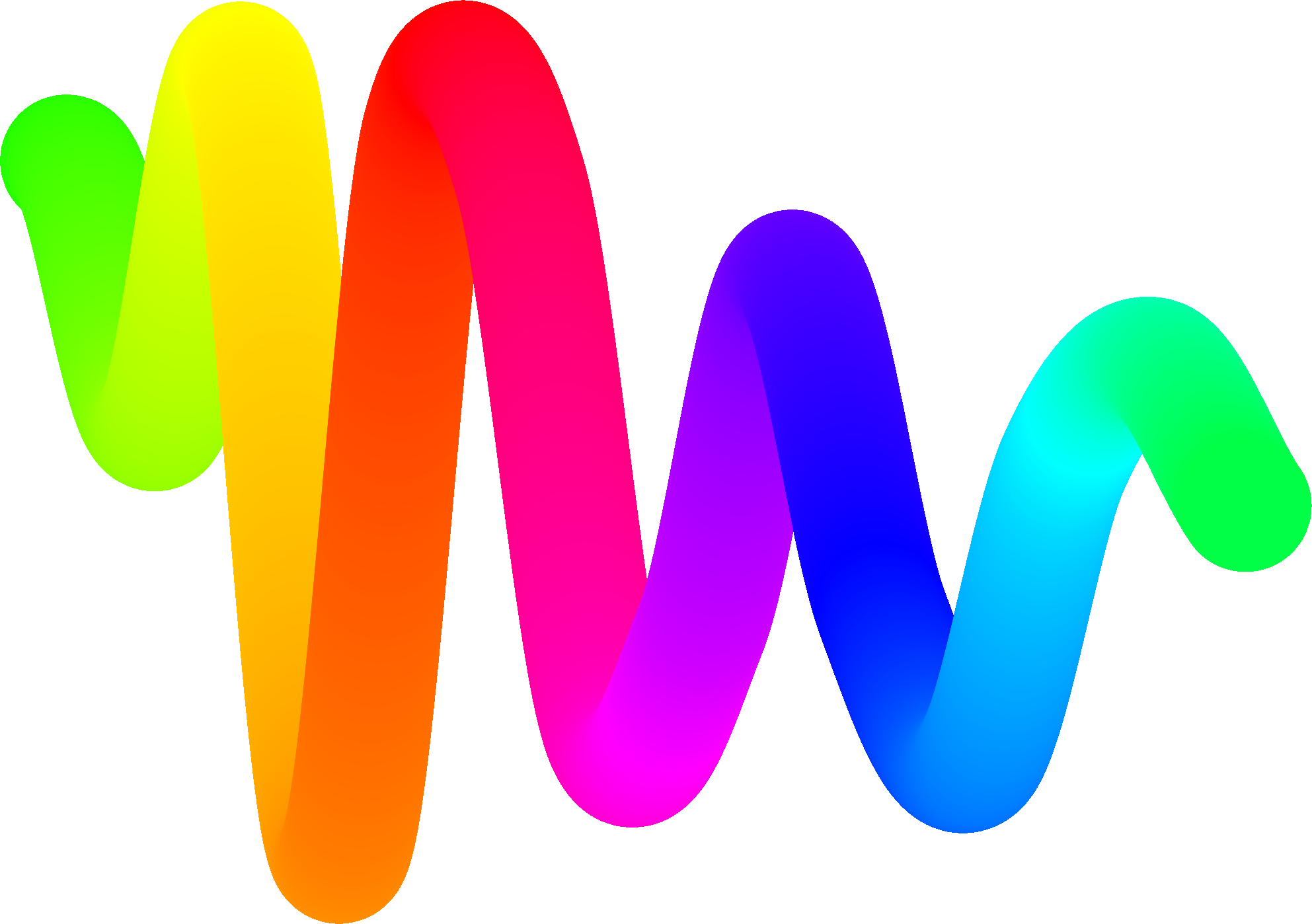
Chromie Squiggles
Two years later, on November 27, 2020, Art Blocks launched in its second iteration and now in its new form, Chromie Squiggle by Snowfro. Erick sent a squiggle to the 14 addresses who claimed the online version in 2018 at no cost. Where the 2018 algorithm for the squiggle produced simple and colorful outputs, the final algorithm in 2020 opened up a new world of possibilities, types, and parameters creating a wide array of categories and types of Squiggles. These Squiggles come in six types: Standard (or Normal), Slinky, Fuzzy, Ribbed, Bold, and Pipe—with Normal being the most common output and Pipe being the rarest.
These systems are made of parameters which are often affected by an input. For Mozart's dice games, this input was the roll of a die. For Chromie Squiggle, it is the hash string of the particular artwork stored on the Ethereum blockchain, which is impossible to predict until the moment of creation. Hash strings are 64-character strings which are effectively randomly generated. In the case of the Chromie Squiggle, the content in the hash string dictates what the artwork will look like within a number of parameters including the starting color, the rate of change between colors, and the spread of points that shape the squiggle.
Squiggles pioneered long-form generative art. In the past, it was common for artists to privately generate as many outputs as they liked and select only a few to be shared with the public. In long-form projects, artists are tasked with creating more robust algorithms capable of creating thousands—or in the case of the squiggle, ten thousand—distinct and compelling outputs which can stand as polished pieces in the collection without being curated by the artist.
-Written by Noah Bolanowski
How to Interact with Squiggles
- On click: Toggle animated cycling
- Spacebar: Cycle background color
- Up/Down: Adjust speed of color
- Shift + Up/Down: Adjust color rotation
Chromie Squiggle Rarity


A Guide to Full Spectrum and Perfect Spectrum Squiggles
Total Color Hue Formula
Let's use #463 as an example:
(14*200)/11 = 254.55 (rounding to 255)
This means 255 hues are displayed AFTER the starting hue, resulting in all 256 hues displayed, making this perfect.
You can use this formula to see how many color hues are displayed on ANY squiggle. As color spread drops, more color hues are displayed and as color spread increases, fewer hues are displayed.
Perfect Spectrum Squiggle
Only a single combination of color spread, segments, and steps between segments will result in a perfect out come.
Full Spectrum Squiggle
The number of hues displayed must come within 1% of perfect. There are only 2 combos of color spread, segments, and steps between segments that will create a full spectrum, making it roughly twice as common as perfect spectrum but still VERY rare in the squiggle universe.